
‘The perfect home peeling, also for sensitive skin’
3. Exfoliant | Peel
-
-

-
-
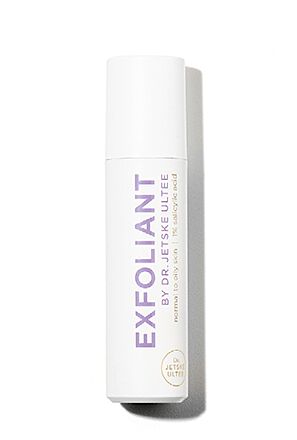 Exfoliant50 mlHome peeling with 1% salicylic acid. For normal, oily, unsettled and/or sensitive skin37,95
 -


Exfoliant
An exfoliant removes built-up dead skin cells without scrubbing, revealing skin that looks smoother, more even and fresher. Dead skin cells are removed by the (fruit) acids in exfoliants. These dissolve the “glue” between skin cells and stimulate cell turnover, instead of “rubbing” like a scrub does. There are different types of chemical exfoliants:
What does an exfoliant do?
An exfoliant smooths the skin and evens out the complexion by removing dead skin cells. This helps dull skin quickly look fresh and radiant again. But exfoliants can do much more for your skin than just remove dead skin cells. What exactly depends on the acid in the Exfoliant.
BHA (salicylic acid)
BHA (salicylic acid) is oil-soluble and penetrates into sebum-filled pores. This allows the ingredient to dissolve blockages and help with blackheads and blemishes. That makes salicylic acid very suitable for unsettled, breakout-prone skin.
AHA (glycolic acid)
AHA (glycolic acid) penetrates the skin very deeply and quickly. This acid refines skin texture and can make superficial pigmentation and fine lines less visible. Glycolic acid also helps improve your skin’s hydration.
Helps your skincare absorb better
And an exfoliant has another benefit. The skincare you apply afterwards works better after using an exfoliant. It no longer has to pass through a thick layer of dead skin cells and can be absorbed much more easily by your skin. For even better results.
The benefits of an exfoliant in a nutshell:
- Instant glow & smoother skin;
- Fewer blackheads/pimples (BHA);
- Finer skin texture, fewer fine lines, a more even tone, hydrating effect (AHA);
- The skincare you apply afterwards can penetrate your skin well and therefore work better.
The active ingredients in the Exfoliant
Glycolic acid (AHA)
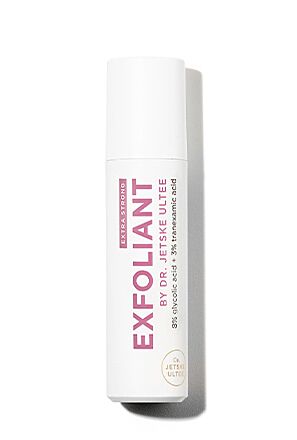
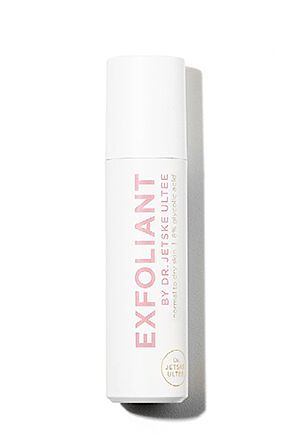
Glycolic acid is water-soluble, has a small molecular size and can therefore penetrate very deeply into the skin. It has a very nice effect on dry skin with the first signs of skin ageing. For good efficacy, the pH should be around 3 to 4 and the formulation must be right. Both Exfoliants for normal to dry skin by Dr. Jetske Ultee contain 8% glycolic acid and hydrating ingredients such as glycerin and allantoin. The Extra Strong variant contains, in addition to glycolic acid, tranexamic acid, which helps reduce pigment spots and also helps prevent them.
Salicylic acid (BHA)
Salicylic acid is oil-soluble and can enter the pore through sebum: this makes the product ideal for blemishes and visible pores. With Dr. Jetske Ultee you can choose between two variants: the Exfoliant with 1% salicylic acid or the Extra Strong variant with 2% salicylic acid plus 3% azelaic acid. The first is suitable for everyday use for more effect on pimples/redness.
With the Extra Strong Exfoliant you will see better and faster results thanks to the higher percentage of salicylic acid and the added azelaic acid. Pimples, bumps and redness will decrease, and it also helps keep blackheads under control. If your skin is extremely sensitive, you can stick with the Exfoliant with 1% salicylic acid; the Extra Strong version may then be too strong for your skin.
If you have very sensitive skin and you’re looking for an exfoliant that refreshes and evens out your skin in a gentle way while keeping your pores clear, choose the Exfoliant with 1% salicylic acid.
Is your skin unsettled? Then choose the Extra Strong variant with salicylic acid.
Quick benefits list
- Glycolic acid (AHA): brightens the skin, hydrates, refines fine lines; works best for normal to dry (and sun-damaged) skin.
- Salicylic acid (BHA): cleans pores, dissolves sebum and soothes; ideal for oily/blemish-prone or sensitive skin that clogs easily.
Which exfoliant suits your skin?
Dr. Jetske Ultee has developed four Exfoliants. Two contain effective concentrations of glycolic acid (AHA) and two contain salicylic acid (BHA). Before use, take a close look at your skin type. Dry skin benefits most from glycolic acid. If you have unsettled, oily or sensitive skin, choose salicylic acid. This fruit acid is oil-soluble, penetrates deeply into the pores and dissolves built-up sebum there. This also makes the product very suitable for skin with pimples.
Normal to dry skin: Choose an AHA exfoliant
1) Choose Exfoliant AHA (8% glycolic acid) for normal to dry skin with a dull tone or superficial discolouration;
2) Choose Exfoliant AHA (8% glycolic acid) + 3% tranexamic acid (Extra Strong) for normal to dry skin with a dull tone or superficial discolouration; tranexamic acid is very effective at tackling the development of pigment spots and helping prevent them.
Normal to oily skin: Choose a BHA exfoliant
3) Choose Exfoliant BHA (1% salicylic acid) for (more) oily, sensitive or blemish-prone skin with clogged pores.
4) Choose Exfoliant BHA (2% salicylic acid) + 3% azelaic acid (Extra Strong) for extra support against blackheads, pimples, bumps and redness
What else can an exfoliant do for the skin?
In addition to removing dead skin cells, a well-formulated exfoliant supports skin structure, refines texture and can make superficial discolouration less visible (AHA). BHA keeps pores clear so they appear less noticeable. Dr. Jetske Ultee formulas combine active acids with soothing and hydrating ingredients (including glycerin, beta-glucan, allantoin).
The difference between an exfoliant and a scrub
- Scrub (mechanical exfoliants): removes dead skin cells by friction (grains/brushes). Incorrect or overly harsh scrubbing can damage the underlying skin layer and disrupt the natural barrier.
- Exfoliant (chemical exfoliants): AHA/BHA dissolve the bonds between cells, allowing dead skin cells to shed without scrubbing. This is milder and more consistent for many skin types. The acids in exfoliants help the top layer of dead skin cells loosen more easily, revealing skin that looks fresh and more “radiant”.
How do you use the exfoliant?
Build up the use of an exfoliant gradually (start with two or three times a week). Once your skin is used to it, you can use the product daily. Below you’ll find the steps for using an exfoliant:
1. Cleanse your skin with a Cleanser (step 1) and
2. Apply your Toner (step 2).
3. Then apply 1–2 pumps of Exfoliant (avoid the eye area). Do not rinse off. Leave to absorb briefly;
4. follow with the Moisturizer (step 4).
5. During the day always finish with SPF (step 5).
6. Build up: start 2–3 times a week and increase to daily if your skin tolerates it well. Preferably do this in the evening
Important about sun and acids AHAs (such as glycolic acid) increase UV sensitivity; therefore use a broad-spectrum sunscreen daily during use and for up to one week afterwards.
Tips for using an exfoliant
- Choose based on skin type: AHA for normal/dry (and sun-damaged) skin, BHA for oily/blemish-prone and/or sensitive skin that clogs easily.
- Introduce slowly (2–3x per week) and increase if your skin tolerates it well.
- SPF 30+ every day (especially with AHA).
- Combining with retinol/vitamin C is possible, but when starting out it’s better to alternate (to avoid irritation) and build up gradually.
- Watch for signs of over-exfoliation (redness, flaking, stinging/tingling): reduce frequency or switch (e.g. from AHA to BHA or vice versa).
Frequently asked questions
What is an Exfoliant?
An Exfoliant is still a relatively unknown player beside our washbasins. This product can, however, give your skin an immense boost. An Exfoliant removes the dead skin cells and gives the skin a fresh and smooth look. And from your thirties onwards, this is no unnecessary extravagance.
Difference between an Exfoliant and a scrub
A scrub does not do the same as an Exfoliant. The granules in scrubs scrape, as it were, the layer of dead skin cells off. But in doing so they can damage the underlying skin layer and thereby disturb the balance of the natural barrier. The acids in Exfoliants ensure that the uppermost layer of dead skin cells dislodge more easily, resulting in the appearance of a fresh, more radiant skin.
The active ingredients in the Exfoliant
Dr. Jetske Ultee has developed two Exfoliants. These contain effective concentrations of Glycolic Acid or Salicylic Acid with the correct pH value. Before using, check your skin type. Dry skin will benefit the most from Glycolic Acid. This water soluble acid dissolves dead skin cells, improves the moisture balance and makes pigmentation spots less visible. If you have problem, oily or sensitive skin, choose the Salicylic Acid. This fat soluble fruit acid penetrates deep into the pores where it dissolves the build-up of sebum. The product is thereby also very suitable for skin with acne.
How to use the Exfoliant?
Gradually build up the use of the Exfoliant (two to three times a week). As soon as your skin is used to it you can increase to daily use. Apply it in the evening, after cleansing with the Cleanser (step 1) and after applying Moisturizer (step 4). Exfoliants can make your skin more sensitive to sunlight. Therefore apply sun cream (step 5) in the morning, after the Moisturizer has been applied and has absorbed in.
What can an Exfoliant do for the skin?
Proper Exfoliants do more than give your skin a fresh feel. Apart from dislodging and removing the build-up of dead skin cells, they immediately improve the moisture balance and strengthen the skin itself. This happens through the activity of specific hydroxy acids. Therefore this applies to all exfoliating products: use them with care. Acids can cause some irritation to begin with. Therefore build up their application gradually. Acids only work with a low pH value (acidic). If the pH value is higher than 5, then your product will probably have little effect.


