
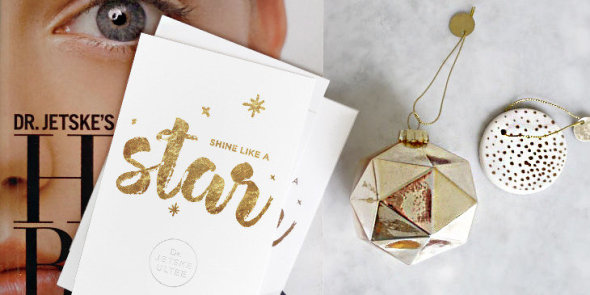

5 Reasons Why Your Skin Doesn’t Look Radiant At Christmas
The lead up to Christmas is a special time of year. It is all glitter and gold that shines, not least in the world of cosmetics, but in the meantime unpleasant skin complaints can occur… From itchy clothing to Christmas tree rash.
1. Christmas stress
Ridiculous actually. The Christmas holidays should be a time to enjoy yourself with friends and family. I don’t know about you, but I can count on one hand the number of relaxed Christmas’s I have had. And that can be anything from more complex recipes that aren’t as easy as they first look, missing ingredients, more people in the house and presents that don’t arrive on time. But this year I will be prepared and ready in time, not leaving things until the last minute. I’m going for a relaxed Christmas without spots, bags and circles under my eyes. All that Christmas stress is no good for your skin.
2. Christmas tree allergy
Yes, it does exist. An allergic reaction on the skin when it comes into contact with the branches or the needles on a Christmas tree. And this so called allergy to colophonium is not uncommon. Asthma sufferers can also feel tightness from a Christmas tree. Some researchers think that the symptoms are caused by fungal spores which are on the trunk of the tree. Other researchers think, however, that the hay fever like symptoms are due more to pollen from certain trees in the woods which attach themselves to the hairs on the trunk of the Christmas tree, and are then released into the air when it is in the living room. If Christmas trees make you itch, go for an artificial one!
3. Mask and glitter chaos
It is a well-known trap just before Christmas. That box of glitter make-up lying around somewhere? A fine mask to give your skin a boost? Be careful with old cosmetic products, they can be full of bacteria and mould and cause a bad reaction on the skin. Check the open pot symbols and, if in doubt, throw away. Always test masks on your under-arm first of all, and don’t leave it until Christmas before experimenting with something like false eyelashes. Reactions to the glue are more common than you may realise.
4. Cold sores in the snow
It is again the prime time of year for cold sores. A cold sore is caused by the Herpes Simplex virus type 1 (HSV-1). Once you have been infected with the virus it can return each time you are ill, stressed, but also emerge in cold weather or in bright sunshine. Special creams containing acyclovir or penciclovir are available for this. If you apply this in time it can limit the discomfort. Although the evidence is still rather flimsy, it has been described in literature that tea tree oil may help. Begin with a diluted solution (e.g. 30% dilution with jojoba oil) and if that causes no problem, you can build up the concentration. Apply a drop of oil to the area two to four times a day. Make sure you wash your hands thoroughly afterwards!
If it is too late for that, then ingredients such as allantoin, zinc sulphate or zinc oxide in cosmetics can relieve the areas.
But prevention is always best. It is actually very important that you protect your lips throughout the year. However, if you are going to snowy or winter sun destinations, be extra careful to protect your skin against the sun and cold temperature.
5. Clothing itch
Natural fibres such as wool and silk do not normally cause an allergic reaction. Having said that, those lovely, soft scarves, hats and turtlenecks still make you itch. Especially people with dry, sensitive skin. The bigger the diameter of the wool fibre (>30 micron), the greater the chance of itching; definitely if the skin is dry or sensitive. If you would still like to wear wool, then be smart when shopping. Merino wool and cashmere wool have a smaller fibre and almost never cause a problem.
If you have wool in your cupboard which makes you itch then make it a bit damp and put in the freezer overnight. You could also wash it with a tiny drop of conditioner or glycerine which can make the fibres softer.
Real (contact) allergic reactions from clothing fibres are fortunately very rare. It is more to do with certain dyes and other additives (e.g. substances that make the fabrics crease resistant) that cause an uncomfortable hypersensitivity reaction. I would advise always using an unperfumed washing powder and also unperfumed fabric softener. You are always best off washing new items of clothing before wearing.
Kind regards,
Jetske
Research Physician Cosmetic Dermatology
You can also read: