

If you search the internet for information about good, safe sun filters, then dermatologists will always advise zinc oxide and titanium dioxide. I have slightly mixed views about this.

The summer months are wonderful, but your skin often suffers from tiredness. And how miserable is it if you have itchy skin full of bumps during your holiday. Last time I told you about real sun allergy (PMLE). Now for some more about the little brother of sun allergy: the phototoxic or photo allergic reaction to substances in your skincare products or medicine.

I wrote in a recent blog about how, in combination with the sun, quite a few ingredients in skincare products can cause irritating skin rashes. But did you know that certain sun filters can even cause problems under the influence of sunlight? It is a strange world. Does your skin suddenly become sensitive in the sun? Then you should check the ingredients list on your own (sun cream) products.

Making your own cosmetics, it seems as though everyone is at it. The internet is swarming with DIY recipes and websites with complete instructions on how to make creams and shampoos. Het Parool asked me for my thoughts on this subject. Can it do any harm to make your own cream, lip balm or scrub?

Yes indeed, after a couple of days in a warm destination, floating around in the sea or a swimming pool, it strikes. Itching! Bumps all over. On the arms, on your neckline and lower legs. Your skin is red and tingly. Recognisable? There are many reasons for a skin rash in the sun. But it is highly likely that you are suffering from a sun allergy. Your fair skin which has been hidden under layers of clothes all winter, and is now all of a sudden exposed to a heavy dose of UV rays, is in protest!

As you know acquiring a tan from the sun or from a sunbed is a no go for me. Since I found out what happens to your collagen, elastin and DNA, I only enjoy the sun with protection. Though people often still say to me ‘You are so brown, have you just been on holiday?’ Now I love travelling, so the chances that I have just returned from abroad are big. That colour doesn’t come from the sun though, it comes from a self-tanner. People are always surprised when I tell them this. Don’t self-tanners make you orange and striped? That was the case in the past. Fortunately though, there has been much development in the world of self-tanning. A little practise, however, is required in order to achieve a natural look. Together with some helpful tips…
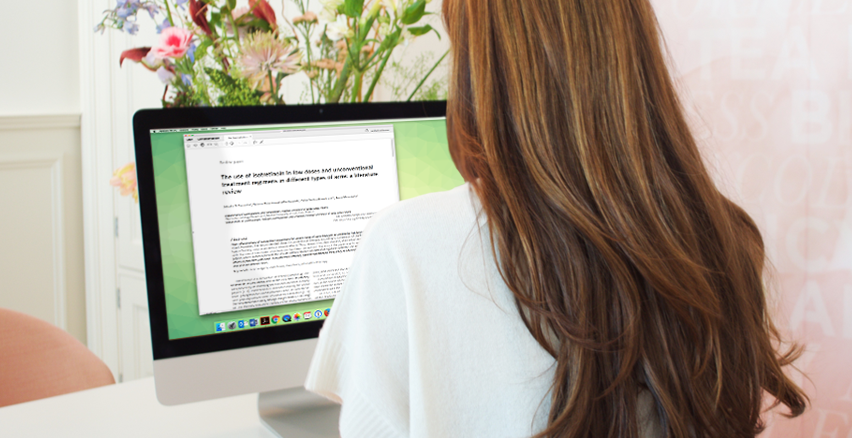
Why do so many doctors stick to the same practices that have been used for decades? Why are so few doctors receptive to new insights? I really don’t want to generalise, but it sometimes frustrates me to see how long it takes for new information to be put into practice. Acne treatment springs immediately to mind. You don’t want to know how many questions I receive on this subject. And time and time again I notice how much misunderstanding, ignorance, bad advice and treatment there is, even though so much can be done for acne.
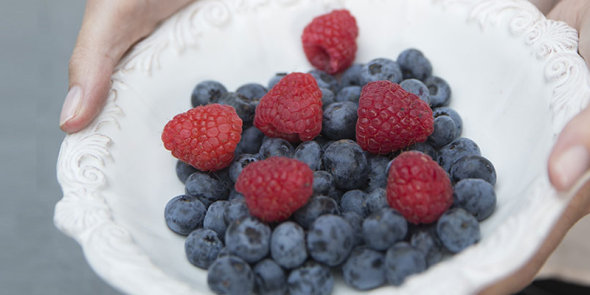
And all of a sudden it’s spring. Oh how I’ve been looking forward to it. It feels as though the cold dark days become more challenging every year. If I can, I try and escape the cold winter briefly for a holiday to a faraway tropical destination with my family. Great! Sadly, my skin is considerably less pleased about it. When you are so close to the equator just applying sun cream is not enough, you need to take several other measures in order to protect your skin from sun damage. That’s why I always take a suitcase filled with caps, hats and sunglasses. Furthermore, I provide my skin with a good dose of antioxidants. And that is not just recommended in those tropical destinations, but also in our own chilly little country.
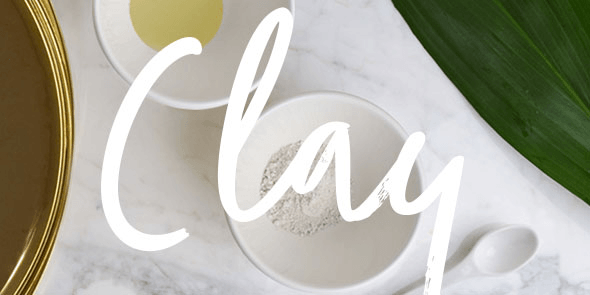
I love state-of-the-art cosmetics with innovative ingredients in fine, high tech airless containers. But having said that, I still have a weakness for natural substances that have been used for centuries. Simple, pure and often cheap. One such age old ingredient taken from nature is clay.

I am naturally very thrilled with all the products that I have, over the last few years, created for my skincare range. Although I was completely overwhelmed by the many super reactions to my Vitamin A Serum. This week I am launching yet another new product. And to let you into a secret, this is sort of my new favourite. It is such a fine cream… A cream which you just need to have with you at all times.